
Navigating Post-Discharge: Best Practices for Smooth Transitions in Mental Health Care
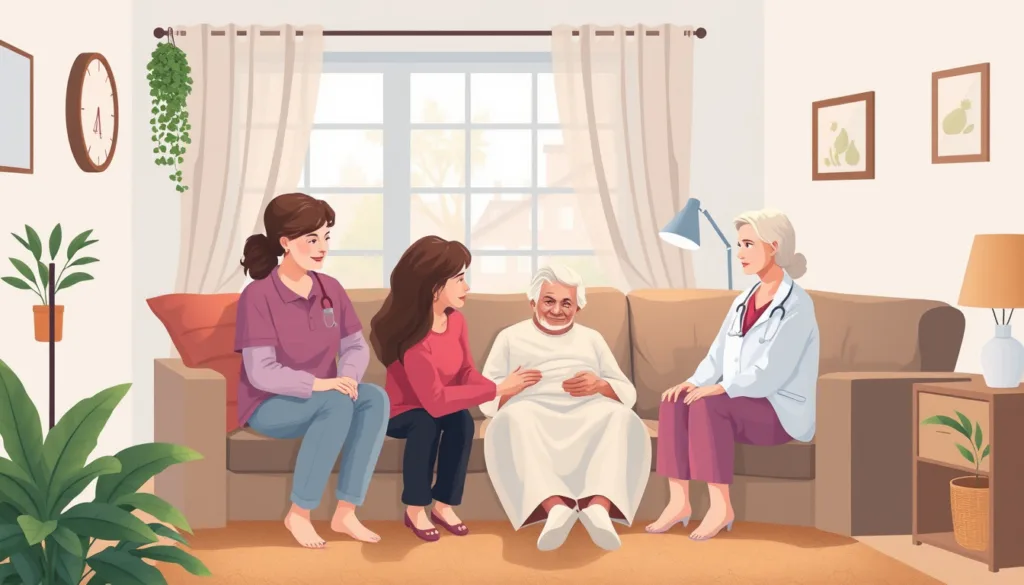
Navigating Post-Discharge: Best Practices for Smooth Transitions in Mental Health Care
Home care transitions are critical when a loved one returns from a mental health unit. The hope for stability is high, but the path ahead is often fraught with uncertainty. Families and care providers frequently grapple with questions about community support and timely follow-up care.
The Challenge: Improving Home Care Transitions in Mental Health
Transitioning care from the hospital back to daily life is complex. Despite good intentions, service gaps often impact the patient’s progress and increase the risk of readmission. These service gaps:
- Leave families overwhelmed, unsure of the next steps.
- Increase the likelihood of premature readmission.
- Result in discontinuous care, with patients frequently losing follow-up.
- Complicate tracking progress owing to individualized care demands.
These challenges significantly hinder a patient’s recovery and overall quality of life.
Key Insights: Harnessing Patterns for Better Outcomes in Mental Health Care
Recent research has leveraged millions of anonymous patient records to focus on person-centric patterns rather than just numerical data. Innovative tools such as patient journey models and heat maps are used to understand:
- The frequency and duration of interactions with various healthcare services over time.
- How some patients experience brief, well-supported hospital visits followed by consistent community care.
- The contrast with others who face unexpected and frequent rehospitalizations due to a lack of follow-up.
- A small group facing highly complex needs, often missing from traditional analytical reports.
Identifying these patterns enables customized support, enhancing the effectiveness of mental health services.
Practical Guidance for Families Navigating Post-Discharge Care
Supporting your loved one after their mental health treatment can be more manageable with these actionable steps:
-
Seek Clearly Defined Discharge Plans:
Ensure you receive detailed information about scheduled follow-ups, medication management, and available community resources. -
Proactively Connect with Community Services:
Act promptly. Get matched with a caregiver in your area who understands mental health needs and provides in-home support. -
Monitor the Continuity of Care:
Keep track of all medical appointments and any treatment changes. Maintain open communication with healthcare providers and be vigilant for potential gaps that could hinder recovery. -
Advocate for Tailored Care Solutions:
If the standard care options are insufficient, inquire about specialized support or extended community care services.
Mental health recovery is a complex process, but with active engagement and adequate supports, significant improvements can be achieved.
A System-Level Perspective: Enhancing Discharge Processes and Minimizing Readmissions
For healthcare providers and planners, effectively mapping the patient journey is paramount. This approach provides:
-
Leverage Data-Driven Insights:
Employ advanced analytics to identify high-risk patients early, facilitating preemptive and targeted interventions. -
Dive Deeper than General Metrics:
Analyze patient outcomes by specific groups to better understand diverse experiences and refine care approaches accordingly. -
Promote Integrated Care Models:
Foster stronger collaborations among hospitals, community care teams, primary care providers, and social services to ensure seamless patient experiences. -
Implement Real-Time Tracking Tools:
Utilize dynamic mapping of patient journeys to promptly identify and address care discontinuities, averting abrupt discharges. -
Encourage Cross-Agency Collaboration:
Share insights and data across various institutions to facilitate widespread improvements and foster national health advancements.
These strategies are essential for creating more fluid discharge processes, reducing unplanned readmissions, and improving the quality of life for individuals facing mental health challenges.
Conclusion: Paving the Way for Improved Mental Health Transitions
Seamless transitions from hospital to home are vital for recovery in mental health scenarios. By adopting a detailed, data-driven approach, mental health care can be more coordinated, responsive, and supportive, significantly enhancing patient outcomes.
Immediate Actions:
- Consider using platforms like Amicare to connect with a caregiver who can provide customized support immediately after discharge.
- Request personalized discharge plans and maintain robust care coordination.
- Healthcare providers should embrace data analysis and collaborate across different sectors to enhance the quality and efficiency of mental health services.
Together, these initiatives can establish more effective care transitions, respecting each individual’s unique healthcare journey and promoting sustained stability and dignity.
